
Sustainability · 2025
In this section54 topics
- Sustainability Policy2 items
- Sustainability Goals & UN SDGs3 items
- Policy Review2 items
- Business Value Chain1 item
- Stakeholder Analysis2 items
- Environmental Sustainability — Overview1 item
- Environmental Policy & Guidelines4 items
- Environmental Policy Review1 item
- Energy Management — Overview1 item
- Energy — Plan & Guidelines2 items
- Energy — Electricity Consumption2 items
- Energy — Fuel Consumption3 items
- Energy — Targets2 items
- Energy — Performance & Outcomes1 item
- Water Management — Overview1 item
- Water — Plan & Guidelines2 items
- Water — Withdrawal, Discharge & Consumption1 item
- Water — Targets2 items
- Water — Performance & Outcomes2 items
- Waste Management — Overview1 item
- Waste — Plan & Guidelines2 items
- Waste — Generation, Disposal & Recycling1 item
- Waste — Targets2 items
- Waste — Performance & Outcomes2 items
- Greenhouse Gas — Overview1 item
- GHG — Plan & Guidelines2 items
- GHG — Emissions2 items
- GHG — Emissions Verification1 item
- GHG — Principles & Standards1 item
- GHG — Targets1 item
- GHG Targets — Net Zero1 item
- GHG — Performance & Outcomes2 items
- Environmental Legal Incidents1 item
- Social Policy & Guidelines3 items
- Social Policy Review1 item
- Social — Principles & Standards Practised1 item
- Human Rights Due Diligence2 items
- Employees — Plan & Guidelines3 items
- Employees — Workforce1 item
- Employees — Remuneration & Provident Fund2 items
- Employees — Training & Development2 items
- Employees — Occupational Health & Safety2 items
- Employees — Labour Relations2 items
- Employees — Employee Representation3 items
- Employees — Targets1 item
- Employees — Performance & Outcomes1 item
- Customers — Plan & Guidelines3 items
- Customers — Satisfaction Results1 item
- Customers — Targets2 items
- Customers — Performance & Outcomes2 items
- Community & Social — Plan & Guidelines3 items
- Community & Social — Targets1 item
- Community & Social — Performance & Outcomes1 item
- Law Violation Incidents1 item
Sustainability Policy
Has a Sustainability Policy
Yes
Policy Description
Srisawad Capital 1969 Public Company Limited is committed to operating the lending business based on the principles of responsible lending under the framework of transparent practices and quality corporate governance principles to achieve sustainable business growth by applying ESG (Environment, Social, and Governance) principles as a guideline for all aspects of business operations. The Company has established a sustainability management policy that is in line with the Sustainable Development Goals (SDGs) to increase the efficiency of sustainable operations throughout the supply chain, as well as to raise awareness and promote employee participation in driving the organization towards the sustainability goals. Focus on balancing economic growth. Environmental conservation and social development so that businesses can operate sustainably in all aspects
Sustainability Goals & UN SDGs
Has Sustainability Goals
Yes
Goals Description
Policies and Goals of Sustainability Management
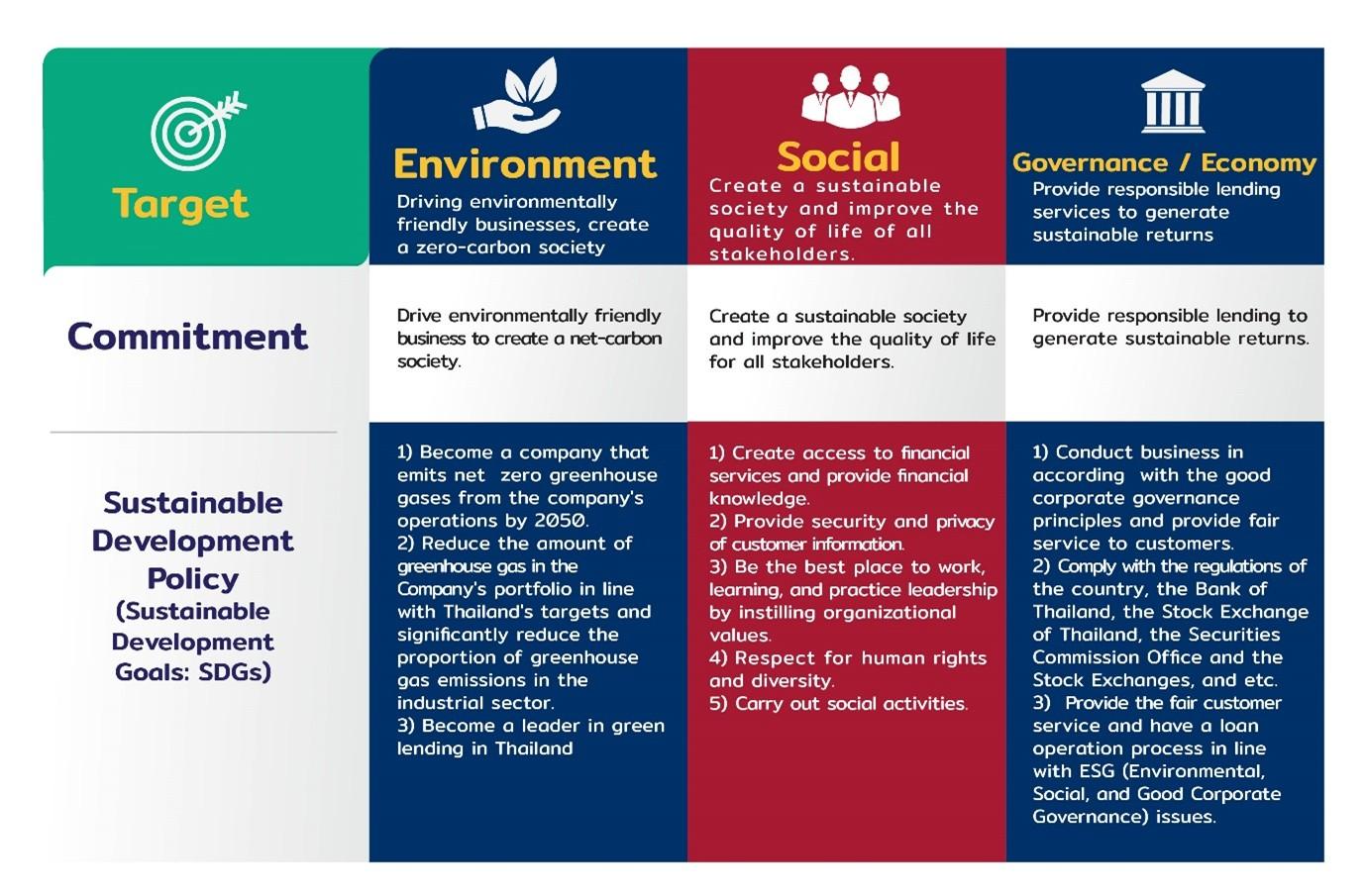
The Company's Sustainable Development Goals (SD Roadmap)
The Company operates its business sustainably by integrating sustainability principles into its strategic plan to meet the expectations of stakeholders in the environmental dimension. The Company has continuously developed a strategy that focuses on environmental management and also prioritizes sustainable growth through good corporate governance (ESG) to be in line with the International Sustainable Development Goals (SDGs) to maximize benefits for the Company and stakeholders at all levels.
Environmental Dimension: Preserving the environment to create a Net-Zero Carbon Society
| |||
Sustainable Development Policy | Long-term Goals (2025 - 2029) | Short-term Goals (2025) | Performance Results (2025) |
Reducing environmental impact from business operations. |
|
|
|
Climate Change Adaptation. |
|
|
|

Social Dimension: Improving Quality of Life to Create a Sustainable Society
| |||
Sustainable Development Policy | Long-term Goals (2025 - 2029) | Short-term Goals (2025) | Performance Results (2025) |
Continuous skill development for employees to adapt to change and drive business growth. |
|
|
|
Respect for Human Rights and Diversity. |
|
|
|
Promoting Financial Literacy and Financial Inclusion. |
|
|
|

Governance/Economic Dimension: Responsible Lending for Sustainable Returns
| |||
Sustainable Development Policy | Long-term Goals (2025 - 2029) | Short-term Goals (2025) | Performance Results (2025) |
Business operations based on Good Corporate. |
|
|
|

UN Sustainable Development Goals
| SDG Goal |
|---|
| Goal 1 No Poverty |
| Goal 3 Good Health and Well-being |
| Goal 6 Clean Water and Sanitation |
| Goal 7 Affordable and Clean Energy |
| Goal 13 Climate Action |
| Goal 15 Life on Land |
Policy Review
Policy Reviewed This Year
No
Policy Changed This Year
No
Business Value Chain
Value Chain Description
The Company conducts business responsibly in accordance with good corporate governance principles. There are supply chain management principles that are the core of business operations, which will help drive the organization towards sustainable development and growth. The company focuses on financial resources management, operating costs, products, and services development as well as sales channels. It is to give importance to providing fair customer services.
The company’s products and services are accurate, clear, and complete. It is to focus on the importance of the continuous development and improvement of operating technology to reduce the impact of waste and greenhouse gases that may occur from loan operations process. At the same time, the after-sales service and the complaints from customers are necessary to develop and improve the Company’s loan operations process and drive the organization towards sustainability. The Company has taken legal action, treated customers fairly in according with the criteria of “Responsible Lending” as announced by the Bank of Thailand (BOT).
Stakeholder Analysis
Introduction
The Company determines relevant stakeholders based on the scope of participation and the characteristics of groups or individuals that have an impact on the Company, as well as those who are directly and indirectly affected by the business operations and activities of the Company. The Company initially defined stakeholders as “Groups of people or agencies that affect or are affected by the Company’s operations and activities,” as follows:
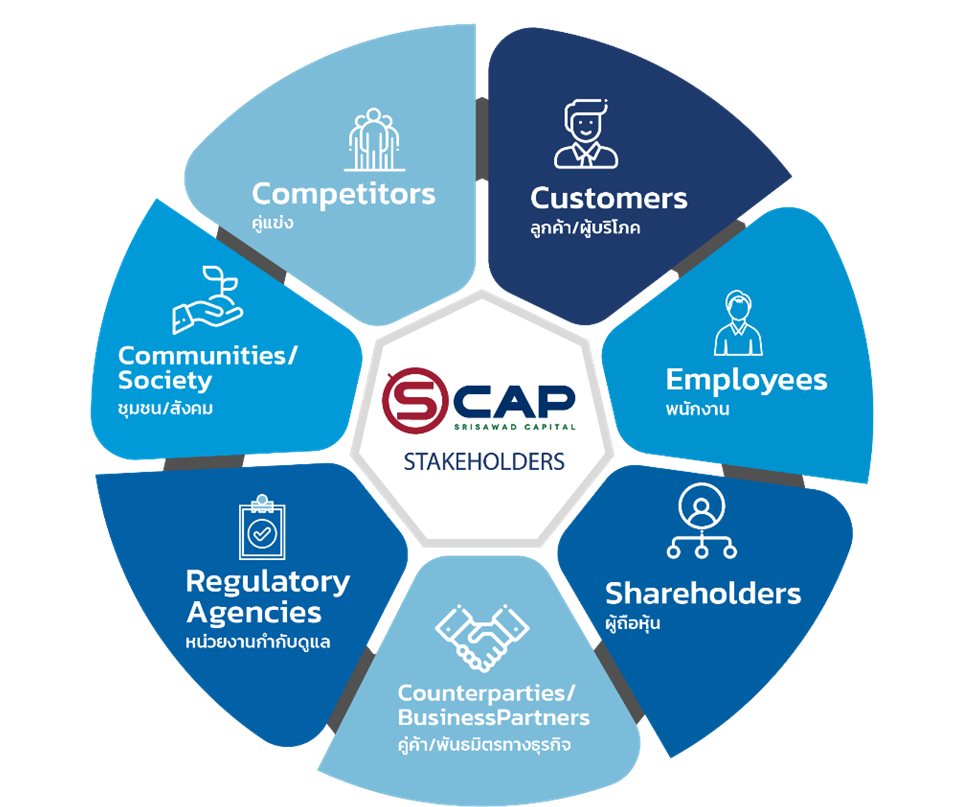
Stakeholder Analysis
| Stakeholder Type | Stakeholders | Stakeholder Expectations | Response to Expectations | Communication Activities |
|---|---|---|---|---|
| External stakeholders | 2913 · Description: Shareholders | - Stable performance and sustainable growth
- Good returns from operation and appropriate dividend payment
- The Company has transparent management, good corporate governance, and appropriate risk management.
- All groups of shareholders receive accurate, complete, and clear information and have equal access to information disclosed by the Company. | - The Company has operating results and appropriate growth reflected in the Company's financial statements, which are continuously growing.
- The Company has appropriate and careful risk management and considers dividend payment to an extent that would not affect future investment.
- The Company manages business well under good corporate governance policies and opposes all forms of corruption.
- The Company discloses information and submits reports with correct and complete information to shareholders and investors equally.
| 2941 · Description: Online Communication · 2944 · Description: Annual General Meeting (AGM) · 2949 · Other name: Quarterly Opportunity Day, Disclosure the quarterly and annual financial statements and management explanations, as well as company information · Description: Others |
| External stakeholders | 2923 · Description: Customers | - Financial products and services that respond to customers' needs and truly help solve problems.
- Excellent service quality.
- Obtaining accurate, complete, and clear product and service information.
- Get convenient after-sales service. | - Develop related products and services to increase the ability to respond appropriately to customers' needs.
- Reveal information about products and services accurately, completely, and clearly.
- Develop abilities, skills, knowledge, and understanding about products and services, including various criteria related to the product or services offering to be consistent with the Market Conduct.
- Listen to comments, suggestions, and complaints of customers to improve and develop the quality of services.
- Customer satisfaction survey : allow customers to evaluate the Company's.
| 2941 · Description: Online Communication · 2945 · Description: Complaint Reception · 2947 · Description: Satisfaction Survey · 2949 · Other name: The document shows the various product details offered to the customer before purchasing the product or service. · Description: Others |
| Internal stakeholders | 2921 · Description: Employees | - Appropriate and fair compensation, benefits, and welfare.
- Opportunities to learn, develop knowledge and abilities.
- Aim to create a culture of responsible, transparent and accountable business practices.
- Human rights and labor treat
- Acknowledge the policies, various information, including the Company's business operations.
- Ability to communicate needs, opinions, and report clues or complaints | - Provide appropriate compensation, welfare, and other benefits.
- Focus on personnel development; provide equal growth opportunities for employees at all levels.
- Develop knowledge and abilities through training courses in various matters for employees continuously.
- Emphasize the importance of occupational health and safety in the workplace as well as promoting employees' good health.
- Arrange communication channels, including appropriate channels for reporting clues and safety for employees.
- Treat employees equally according to human rights principles without discrimination against gender, religion, or race; everything is arranged in accordance with labor laws.
- Survey employee engagement towards the organization to develop and strengthen the bond between employees and the organization more effectively. | 2942 · Description: Internal Meeting · 2945 · Description: Complaint Reception · 2946 · Description: Employee Engagement Survey · 2948 · Description: Training / Seminar · 2949 · Other name: Set goals for work and evaluate work performance using the Key Performance Indicators (KPI) · Description: Others |
| External stakeholders | 2899 · Description: Suppliers · 2900 · Description: Business partners | - There is a procurement procedure, with a fair and transparent selection of partners and suppliers.
- Treat all business partners equally.
- Make a fair contract and comply with the terms of the contract.
| - There is a fair and transparent supplier selection process.
- Provide details to suppliers accurately, clearly, completely, and equally.
- Conduct business with partners in accordance with the terms of the contract or policy.
- Treat creditors or bond holders in accordance with the contract and various conditions defined.
| 2941 · Description: Online Communication · 2943 · Description: External Meeting · 2945 · Description: Complaint Reception · 2949 · Other name: Selection process and evaluation of the performance of partners. · Description: Others |
| External stakeholders | 2931 · Description: Government agencies and Regulators | - Comply with specified laws and criteria.
- Conduct business based on the principles of good corporate governance and conduct business responsibly.
| - Comply with rules, regulations, and laws related to business operations.
- Develop the company's work processes in accordance with the requirements, recommendations, and observations received from regulators. | 2941 · Description: Online Communication · 2943 · Description: External Meeting · 2948 · Description: Training / Seminar · 2949 · Other name: Prepare reports to submit to regulatory agencies. · Description: Others |
| External stakeholders | 2902 · Description: Community · 2928 · Description: Society | - Conduct business ethically with responsibility to society and environment.
- Support various activities and shares, developed, and live in harmony with the communities without any problems. | - The Company creates a good conscience among employees by promoting morality and ethics in their work.
- The Company creates good conscience among employees in taking care of both internal and external resources and works together to preserve the overall environment.
- Activities are organized to promote relationships between the Company and the communities.
- There are activities that help promote the well-being of people in the communities, such as providing financial knowledge, including the dissemination of financial knowledge through online channels to increase the opportunity to access good information for people of all genders and ages.
| 2940 · Description: Social Event · 2941 · Description: Online Communication · 2948 · Description: Training / Seminar |
| External stakeholders | 2898 · Description: Competitors | - Business operations and competition with transparency and fairness in accordance with the market ethics framework
. | - Businesses are operated according to business ethics as well as fair competition. | 2949 · Other name: Meetings to meet, exchange ideas and cooperate on various occasions. · Description: Others |
Environmental Sustainability — Overview
Operating Results — Introduction
The company conducts its business based on environmental responsibility and is committed to mitigating the environmental impacts arising from its operations, including investments in the prevention, mitigation, and restoration of critical ecosystems. Furthermore, establishing effective environmental management mechanisms has been a guiding principle for the company since its inception. The company is dedicated to developing social and environmental responsibility both within and outside the organization throughout its value chain. This is implemented through various activities and projects related to social and environmental responsibility, both within the organization and in other areas where the organization is involved. The company has policies and adheres to principles that promote the conservation of natural resources and the environment, encourage the judicious use of resources and energy, as well as the selection of environmentally friendly materials, equipment, and office supplies.
Environmental Policy & Guidelines
Introduction
The company promotes environmental conservation by establishing environmental management policies consistent with its business objectives and sustainable development guidelines, aligned with the United Nations Sustainable Development Goals (SDG 2030). It focuses on fostering cooperation among all employees and departments within the organization in fulfilling their environmental conservation duties.
The company strictly adheres to environmental laws and standards while raising employee awareness regarding sustainable business operations. This involves promoting resource reduction, reuse, and the restoration of natural resources, as well as efficient use of resources and energy in the workplace, including waste volume control and recycling. Furthermore, the company supports resource management and the reduction of consumable materials. It also studies and implements measures to mitigate the impacts of climate change through energy conservation and the adoption of electronic documents to reduce paper consumption and travel.
Furthermore, the company provides knowledge and information on environmental conservation to employees and supports environmental activities such as reducing plastic usage, promoting the use of cloth bags and personal water bottles, and developing and improving environmental management processes to minimize negative impacts and maximize the utilization of natural resources. This also includes assessing environmental risks in business decisions and supporting the procurement of environmentally friendly products. Additionally, the company collaborates with both public and private sectors to promote projects aimed at reducing environmental impact.
Has an Environmental Policy
Yes
Policy Description
The framework for social responsibility operations and guidelines covers the following matters:
-
Strictly comply with relevant environmental laws, regulations, and standards.
-
Incorporate environmental issues as a factor in systematic risk management planning to reduce negative direct and indirect impacts on the environment.
-
Develop and improve environmental management systems, as well as continuously enhance operational processes to mitigate the negative impacts of environmental issues and support the economical and efficient use of resources.
-
Promote work processes or related activities that support the reduction of waste and pollution, and maximize the utilization of natural resources.
-
Campaign and encourage employees to be aware of or participate in activities, both corporate and personal, that help reduce waste and pollution, whether through reducing consumption or reusing.
-
Prevent pollution resulting from operations or activities that may impact the environment.
-
Support the procurement of environmentally friendly goods and services, including sourcing suppliers who comply with the Supplier Code of Conduct, which covers environmental issues.
Environmental Guidelines
| Guideline |
|---|
| Electricity Management |
| Fuel Management |
| Water Management |
| Waste Management |
| Greenhouse Gas and Climate Change Management |
Environmental Policy Review
Policy Reviewed This Year
No
Energy Management — Overview
Introduction
The company prioritizes the valuable and most beneficial use of energy. It has concretely promoted policies and established plans regarding energy conservation. In addition to reducing energy costs, this also helps mitigate problems or impacts from climate change resulting from the organization's direct and indirect energy consumption. The company aims to foster a positive attitude towards efficient energy use by establishing an energy conservation working group. This group is responsible for overseeing, advising, and implementing energy management according to legally mandated energy conservation measures, and managing energy efficiently. Furthermore, the company provides training to employees to raise awareness, understanding, and cooperation in adhering to the organization's energy conservation policy, reducing energy consumption, and maximizing energy utility. This includes reducing electricity consumption, air conditioning usage, passenger elevator usage, office equipment usage, and fuel consumption.
Energy — Plan & Guidelines
Has an Energy Management Plan
Yes
Plan Description
Srisawad Capital 1969 Public Company Limited prioritizes efficient energy consumption and the reduction of greenhouse gas emissions from its business operations, particularly from electricity usage in the company's offices and branches. Therefore, the company has established Energy Management Plan to promote efficient use of energy resources, reduce operational costs, and support the organization's sustainable development goals.
1. Objectives
-
Reduce electricity consumption and greenhouse gas emissions from business operations.
-
Promote employee participation in responsible energy consumption.
-
Support the company's environmental management and sustainability goals.
2. Operational Guidelines
The company implements internal energy management measures as follows:
-
Control the turning on and off of lights within the office by switching off lights during lunch breaks (12:00 – 13:00) and separating control switches for specific areas to reduce unnecessary energy consumption.
-
Switch to energy-efficient light bulbs, such as LED bulbs, in the head office and branch offices.
-
Set specific times for turning air conditioners on and off during operating hours and maintain a temperature of 25 degrees Celsius.
-
Promote the use of stairs for ascending and descending one floor instead of using elevators, and close elevators during off-peak hours.
-
Install automatic energy-saving systems for desktop computers and notebooks, such as setting screens to turn off when not in use.
-
Promote the selection of energy-efficient office equipment and encourage employees to unplug electrical devices when not in use.
3. Monitoring and Evaluation
The company continuously monitors and evaluates energy consumption to analyze energy usage trends and the effectiveness of implemented measures, as well as to establish Key Performance Indicators (KPIs) to measure the success of energy reduction within the organization.
4. Employee Engagement
The company encourages employees at all levels to participate in energy conservation through internal communication, awareness campaigns, and promoting efficient energy usage behaviors to foster an organizational culture of sustainable resource utilization.
Energy — Electricity Consumption
Introduction
Management Guidelines
-
Turning lights on/off inside office buildings during the break from 12:00 PM - 1:00 PM and separating control switches for specific areas.
-
Replacing light bulbs with energy-saving ones in the parking lot.
-
Turning air conditioners on/off during operating hours, with on/off times from 08:30 AM - 05:30 PM, and setting the temperature at 25 degrees Celsius.
-
Using stairs for single-floor ascents/descents instead of passenger elevators and suspending passenger elevator service during off-peak hours.
-
Implementing automatic power-saving settings for desktop PCs and notebooks, requiring all employees to set screens to turn off when not in use, selecting office equipment with energy-saving ratings, and unplugging all office appliances after work hours.
-
Utilizing natural light in conjunction with electricity by designing the building with surrounding glass to conserve electricity.
-
Utilizing Triple Glazed windows with sun-blocking film and heat insulation on the glass to help reduce heat and temperature build-up in the building, thereby reducing energy consumption.
-
Maintenance: Selecting energy-saving office equipment such as energy-saving light bulbs, installing energy-efficient air conditioners, etc., and maintaining green space of no less than 40% of the company's open area.
Electricity Consumption
| Metric | Current Year | Previous Year | Two Years Ago |
|---|---|---|---|
| Total electricity consumption within the organization (Kilowatt-Hours) | 507,279 | 1,460,903.56 | 789,508.71 |
| Electricity purchased for consumption from non-renewable energy sources (Kilowatt-Hours) | 507,279 | 1,460,903.56 | 789,508.71 |
| Electricity purchased or generated for consumption from renewable energy sources (Kilowatt-Hours) |
Energy — Fuel Consumption
Introduction
Recognizing the impact of greenhouse gas emissions as a primary cause of global warming and climate change, the Company is committed to conducting its business alongside efficient resource management. Despite the inherent necessity for fuel consumption due to the nature of our operations, we remain steadfast in our dedication to minimizing our environmental footprint to the fullest extent possible.
As a result of continuous business expansion, increased lending, and a growing customer base, our fuel consumption—particularly from transport vehicles—is on an upward trend. This contributes to our overall greenhouse gas emissions. Consequently, the Company prioritizes systematic data collection and tracking of fuel usage to analyze trends and develop effective energy reduction measures. In 2025, although fuel usage increased within the field sales and debt collection departments, the Company has addressed this by establishing clear guidelines for fuel management as follows:
Guidelines for Fuel Management:
Fuel Consumption Optimization: Establish criteria and spending caps for fuel expense reimbursements for branch staff, based on operational necessity and appropriateness, to ensure maximum energy efficiency.
Promotion of Clean Energy: Implement a policy to actively transition to Electric Vehicles (EVs) for operational use, aiming to reduce pollution and long-term greenhouse gas emissions.
Fuel Consumption
| Metric | Current Year | Previous Year | Two Years Ago |
|---|---|---|---|
| Crude oil (Barrels) | |||
| Coal (Metric tonnes) | |||
| Jet fuel (Litres) | |||
| Diesel (Litres) | 1,243,254 | 1,395,442.4 | 49,068 |
| Gasoline (Litres) | 491,625 | ||
| Fuel oil (Litres) | |||
| Natural gas (Standard cubic feet) | |||
| LPG (Kilograms) | |||
| Steam (Metric tonnes) |
Other Fuels
| Fuel | Unit | Current Year |
|---|---|---|
| Gasohol95 | 1673 · Description: Litres | 1,280,421 |
Energy — Targets
Has Set Targets
Yes
Targets
| Target | Base Year | Base Year Value | Target Year | Target Change (%) | Unit |
|---|---|---|---|---|---|
| Reduction of electricity purchased and fuel consumption | 2,024 | 1,460,903.56 | 2,025 | 5 | Kilowatt-hour |
| Reduction of fuel consumption | 2,025 | 2,027 | 5 | Kilowatt-hour | |
| Increase of fuel consumption from renewable energy sources | 2,023 | 2,028 | 20 | Kilowatt-hour |
Energy — Performance & Outcomes
Has Performance Results
No
Water Management — Overview
Introduction
The company recognizes the importance of water resources, which are fundamental for sustaining life. Therefore, it has initiated the establishment of a water management policy to address Sustainable Development Goal (SDG) 6, which aims to "Ensure availability and sustainable management of water and sanitation for all." The company will define projects and water management plans to utilize water resources efficiently and for maximum benefit.
Water — Plan & Guidelines
Has a Water Management Plan
Yes
Plan Description
-
Establish environmental management policies and set short-term and long-term goals for reducing water resource consumption.
-
Regularly inspect equipment and repair damaged equipment or equipment causing unnecessary water loss, adhering to the 5Rs principles: Reduce, Reuse, Recycle, Refuse, and Renewable.
Water — Withdrawal, Discharge & Consumption
Water Withdrawal, Discharge & Consumption
| Metric | Current Year | Previous Year | Two Years Ago |
|---|---|---|---|
| Total water withdrawal (Cubic meters) | |||
| Total water withdrawal by third-party water (Cubic meters) | |||
| Total water withdrawal by surface water (Cubic meters) | |||
| Total water withdrawal by groundwater (Cubic meters) | |||
| Total water withdrawal by seawater (Cubic meters) | |||
| Total water withdrawal by produced water (Cubic meters) | |||
| Percentage of wastewater treated before discharge (%) | |||
| Total water discharge (Cubic meters) | |||
| Total water discharge to third-party water (Cubic meters) | |||
| Total water discharge to surface water (Cubic meters) | |||
| Total water discharge to groundwater (Cubic meters) | |||
| Total water discharge to seawater (Cubic meters) | |||
| Total water consumption (Cubic meters) | 6,251 | 20,309 | 22,015 |
| Recycled water (Cubic meters) |
Water — Targets
Has Set Targets
Yes
Targets
| Target | Base Year | Target Year | Target Change (%) | Unit |
|---|---|---|---|---|
| Reduction of water withdrawal | 2,025 | 2,027 | 5 | Cubic meters |
Water — Performance & Outcomes
Has Performance Results
Yes
Performance Description
The Company has launched a campaign to reduce unnecessary water consumption through public relations and the display of informational boards at its head office and branch offices. This initiative aims to raise employee awareness and instill positive values among staff. The Company has set a target to reduce water consumption for the years 2023-2025 to not exceed 90,000 cubic meters per year. In 2025, the total annual water consumption was recorded as 6,251.85 cubic meters.
Waste Management — Overview
Introduction
The company recognizes the importance of proper waste disposal, thus adopting a waste management approach to achieve sustainability goals. This specifically supports Goal 11, which aims to reduce the negative environmental impact of cities, particularly through waste management, and Goal 12, which promotes the efficient use of natural resources and waste reduction through the 5Rs process (Refuse, Reduce, Reuse, Recycle, and Renewable).
Waste — Plan & Guidelines
Has a Waste Management Plan
Yes
Plan Description
-
To educate the public and youth on reducing and sorting solid waste, separating hazardous waste from the community, reducing the use of plastic bags and foam, or using environmentally friendly materials.
-
To campaign for awareness in reducing, sorting, reusing, and separating hazardous waste, and promoting the use of environmentally friendly products and services.
-
Waste is sorted under the 'Think Before You Litter' project.
Waste — Generation, Disposal & Recycling
Waste Generation, Disposal & Recycling
| Metric | Current Year | Previous Year | Two Years Ago |
|---|---|---|---|
| Total waste generated (Kilograms) | 67,942 | 79,492 | 79,532 |
| Non-hazardous waste (Kilograms) | 67,942 | 79,492 | 79,532 |
| Non-hazardous waste - Landfilling (Kilograms) | |||
| Non-hazardous waste - Incineration (with energy recovery) (Kilograms) | |||
| Non-hazardous waste - Incineration (without energy recovery) (Kilograms) | |||
| Non-hazardous waste - Other disposal operations (Kilograms) | |||
| Hazardous waste (Kilograms) | 0 | 0 | 0 |
| Hazardous waste - Landfilling (Kilograms) | |||
| Hazardous waste - Incineration (with energy recovery) (Kilograms) | |||
| Hazardous waste - Incineration (without energy recovery) (Kilograms) | |||
| Hazardous waste - Other disposal operations (Kilograms) | |||
| Total reused/recycled waste (Kilograms) | 494 | ||
| Reused/Recycled non-hazardous waste (Kilograms) | |||
| Reused non-hazardous waste (Kilograms) | |||
| Recycled non-hazardous waste (Kilograms) | |||
| Reused/Recycled hazardous waste (Kilograms) | |||
| Reused hazardous waste (Kilograms) | |||
| Recycled hazardous waste (Kilograms) |
Waste — Targets
Has Set Targets
Yes
Targets
| Waste Type | Disposal Approach | Target | Base Year | Target Year | Target Year Value | Target Change (%) | Unit |
|---|---|---|---|---|---|---|---|
| Non-hazardous waste | 2760 · Description: Landfilling | Increase waste utilization | 2,023 | 2,025 | 0 | 0 | Tonne |
Waste — Performance & Outcomes
Has Performance Results
Yes
Performance Description
Waste Separation Management within the Head Office Building
To address SCAP's solid waste problems and respond to sustainable environmental management guidelines, the company has launched a campaign project Think Before You Dispose, Year 2025 which is a continuous project from the 2024 fiscal year, to enable SCAP employees to recognize and understand the importance of waste reduction and proper waste management. Each department separates and disposes of waste correctly according to its type or reuses it. Adhering to the 5Rs principle will significantly reduce waste volume, help create a pleasant working environment, and genuinely raise awareness among employees. Importantly, this waste can be reused.
Objectives
-
To campaign for raising employee awareness in waste separation at the source.
-
To reduce waste volume before it enters the proper waste disposal process.
-
To promote and support employee participation in waste management activities.
Waste is a significant problem affecting health and the environment. Therefore, the company has implemented participatory waste management at its head office building by instilling awareness among employees regarding waste reduction, separation, and environmental preservation within the organization. To mitigate the issue of increasing waste volume, the company has installed waste separation bins for appropriate waste types on each floor of the office for convenient management. These are categorized into plastic cups, plastic water bottles, and plastic straws, which are separated by type and collected for sale. This adds value to the waste and facilitates its entry into the recycling process for reuse. The proceeds from this will be used for the company's social activities. Thus, systematic waste management from the source, with separate bins/bags according to waste type, will lead to efficient waste management, reduce various potential impacts, and raise employee awareness of the importance of participating in solving waste and food waste problems. In 2025, the "We Use, We Separate" project received excellent cooperation from employees.
Greenhouse Gas — Overview
Introduction
The company is committed to creating a better world under the goal of becoming a NET Zero organization by 2050, which entails reducing carbon dioxide (CO2) emissions and business pollution to net zero. The company recognizes the importance of managing risks from climate change and discloses climate-related financial information (TCFD), covering risks from government policies and regulations, physical risks, and risks impacting business operations.
GHG — Plan & Guidelines
Has a GHG Management Plan
Yes
Plan Description
-
The company's sustainability strategy has clearly defined Environmental, Social, and Governance (ESG) goals to achieve net-zero greenhouse gas emissions targets for both direct (Scope 1) and indirect (Scope 2) emissions by 2040. This strategy will enable the company to drive towards sustainable development and business resilience, protect the environment, support local communities, and enhance governance, in line with the strategic objective of "Sustainable Growth" to foster sustainable development and achieve net-zero greenhouse gas emissions.
-
The company is committed to increasing the proportion of renewable energy usage by increasing investments in renewable energy and studying low-carbon energy technologies. Additionally, it promotes overall energy efficiency to achieve maximum effectiveness. Concurrently, it fosters awareness and understanding among stakeholders regarding energy reduction.
-
The company prioritizes climate change risks by establishing operational guidelines to improve and enhance its ability to cope with climate change while simultaneously creating value for its business and communities. The company utilizes this approach to disclose climate-related financial risks in accordance with the guidelines of the Task Force on Climate-related Financial Disclosures (TCFD) to ensure transparency for all stakeholders and align with international best practices.
GHG — Emissions
Introduction
Carbon Footprint Management
The Company manages its organizational carbon footprint to ascertain the amount of greenhouse gas emissions and removals by the organization, as well as to support and promote greenhouse gas management for the benefit of the economy, society, and environment. This aligns with government policies and agreements under the United Nations Framework Convention on Climate Change (UNFCCC). To ensure maximum business efficiency, the Company has integrated stakeholder engagement into its operational framework for becoming a low-carbon organization, supporting development in line with sustainable development goals. The Company has prepared its organizational carbon footprint by measuring greenhouse gas emissions across three scopes.
GHG Emissions
| Metric | Current Year | Previous Year | Two Years Ago |
|---|---|---|---|
| Total GHG emissions (Metric tonnes of carbon dioxide equivalent) | 7,733.74 | 10,730.92 | 557.52 |
| Total greenhouse gas emissions 1 (Metric tonnes of carbon dioxide equivalent) | 7,458.66 | 8,511.7 | 134.5 |
| Total greenhouse gas emissions 2 (Metric tonnes of carbon dioxide equivalent) | 257 | 2,191.2 | 395 |
| Total greenhouse gas emissions 3 (Metric tonnes of carbon dioxide equivalent) | 18.08 | 28.02 | 28.02 |
GHG — Emissions Verification
Emissions Verified by a Third Party
No
GHG — Principles & Standards
Principles & Standards Applied
| Standard |
|---|
| 2671 |
GHG — Targets
Has Set GHG Targets
Yes
GHG Targets — Net Zero
Net Zero Targets
| Emission Scope | Base Year | Base Year Emissions | Near-term Target Year | Near-term Target Change (%) | Long-term Target Year | Long-term Target Change (%) | Target Year | Target Change (%) | Unit |
|---|---|---|---|---|---|---|---|---|---|
| 2716 | 2,024 | 10,730 | 2,030 | 25 | 2,050 | 0 | 2,030 | 25 | Metric tonnes of carbon dioxide equivalent |
GHG — Performance & Outcomes
Has Performance Results
Yes
Performance Description
Care the Bear Project
The Company, in collaboration with the Stock Exchange of Thailand, participates in the Care the Bear project to modify behaviors and reduce greenhouse gas emissions from various organizational activities, both online and onsite. Examples include shareholder meetings, electronic shareholder meetings (e-AGM), online meetings, analyst meetings, executive-employee meetings, training sessions, award ceremonies, and CSR events. The project utilizes the 6 Cares principles to design, evaluate, measure results, The Company is committed to fostering a sustainable organizational culture. In 2025, the Company transitioned its onsite training programs to an online format. Key performance highlights regarding our environmental and social initiatives are as follows:
Sustainable Commuting: Promoted the use of public transportation or carpooling among employees, achieving 100% participation.
Waste Reduction (Paper & Plastic): Reduced the consumption of paper and plastic in documentation and packaging, achieving a 100% success rate.
Styrofoam-Free Initiative: Eliminated the use of styrofoam in both packaging and event decorations, with 100% compliance.
Energy Efficiency: Reduced energy consumption from electrical appliances and transitioned to energy-saving equipment, achieving 100% implementation.
Sustainable Design: Utilized recyclable materials for all decorative designs, achieving 100% of the target.
Food Waste Management: Minimized food waste during corporate events, resulting in a 100% reduction in excess waste.
To ensure that sustainable development operations align with the framework and guidelines stipulated in the environmental policy, the Sustainable Development Working Group has concretely studied environmental operational approaches and set environmental operational plan targets within the Sustainable Development Roadmap. This is to promote projects or activities that foster environmental awareness among employees and stakeholders through various channels, as well as to monitor and oversee environmental management operations to ensure they adhere to the established operational plan.
Environmental Legal Incidents
Legal Violation Incidents
| Metric | Current Year | Previous Year | Two Years Ago |
|---|---|---|---|
| Number of cases or incidents of legal violations or negative environmental impact (cases) | 0 | 0 | 0 |
Employees — Plan & Guidelines
Has an Employee Management Plan
Yes
Plan Description
1. Fair employee compensation
The Company has a policy of compensating employees based on their knowledge, abilities, and performance, taking into account appropriateness, fairness, and alignment with the average compensation in similar business sectors. Furthermore, the Company determines annual bonus payments and salary adjustments based on the financial performance of each fiscal year and the individual performance of each employee, as a form of reward and incentive for employees to perform their duties to their full potential.
Other benefits
Provident Fund: The Company has established a policy requiring all permanent employees with at least one year of service to enroll as members of the Company’s Provident Fund. Employees may, however, opt to withdraw from the Fund during their employment; in such cases, re-enrollment shall not be permitted. Employees shall make contributions to the Fund and receive employer contributions in accordance with the following rates.
The Company has established a provident fund to promote long-term savings for employees, whereby both employees and the Company contribute to the Fund in accordance with the prescribed criteria.
Employee Contributions
Employees may elect to contribute at rates of 3%, 5%, 7%, 9%, 11%, 13%, or 15% of their salary. Such contribution rates may be adjusted once annually in January.
Employer Contributions
The Company contributes to the Fund based on employees’ length of service, as follows:
3% of salary for employees with less than 5 years of service
5% of salary for employees with at least 5 years but less than 10 years of service
7% of salary for employees with 10 years of service or more
Vesting of Employer Contributions
Employees are entitled to employer contributions upon termination of membership, based on their length of service, as follows:
0% for service of 3 years or less
25% for service exceeding 3 years but not exceeding 5 years
50% for service exceeding 5 years but not exceeding 7 years
100% for service exceeding 7 years
Insurance: The Company provides welfare benefits in the form of health insurance, life insurance, and accident insurance to facilitate medical treatment, as well as to create security for employees and reduce the burden of medical expenses. Additionally, the Company allows employees to purchase insurance and compulsory motor insurance (Por Ror Bor) for motorcycles and personal cars at special prices.
Benefits in the form of financial assistance: The Company provides benefits in the form of financial assistance for various occasions, such as scholarships for employees' children, financial aid in case of an employee's or their parent's death, etc.
Employee Accommodation: To alleviate the cost of living burden for employees, the Company provides accommodation. Employees are permitted to stay at branch buildings if necessary, and employees based at the Head Office are allowed to reside in the company's dormitory, which is located near the Head Office building in Bangkok.
Relationship-building activities: As the unity and solidarity among employees are crucial for successful and highly efficient operations, the Company organizes various relationship-building activities for employees. These include New Year's parties, internal sports competitions across all regions nationwide, annual team-building activities for each department, and Corporate Social Responsibility (CSR) activities to provide opportunities for employees to collectively contribute to society and their communities.
Plan Areas
| Plan Area |
|---|
| Fair employee compensation |
| Employee training and development |
| Promoting employee relations and participation |
| Migrant/foreign labor |
| Child labor |
| Occupational health and safety in workplace |
Employees — Workforce
Workforce Data
| Metric | Current Year | Previous Year | Two Years Ago |
|---|---|---|---|
| Total number of employees (Persons) | 2,033 | 2,341 | 2,801 |
| Number of male employees (Persons) | 1,570 | 1,840 | 2,190 |
| Number of female employees (Persons) | 463 | 501 | 611 |
| Total employment of disabled persons (people) | 24 | 37 | 23 |
| Total disabled employees (people) | 24 | 37 | 23 |
| Total male disabled employees (people) | 13 | 20 | 10 |
| Total female disabled employees (people) | 11 | 17 | 13 |
| Total disabled workers who are non-employee (people) | 0 | 0 | 0 |
| Contributions to the fund for promoting and improving the quality of life for disabled persons | 0 | 0 | 0 |
| Total number of male employees in operational level (Persons) | 1,473 | 1,707 | 2,111 |
| Total number of male employees in management level (Persons) | 94 | 129 | 77 |
| Total number of male employees in executive level (Persons) | 3 | 4 | 2 |
| Total number of female employees in operational level (Persons) | 450 | 469 | 479 |
| Total number of female employees in management level (Persons) | 11 | 29 | 130 |
| Total number of female employees in executive level (Persons) | 2 | 3 | 2 |
Employees — Remuneration & Provident Fund
Introduction
Compensation and Welfare Policy, Long-term Compensation
The Company has a policy of compensating employees based on their knowledge, abilities, and performance, taking into account fairness, appropriateness, and alignment with the average compensation in similar businesses. Additionally, the Company has established annual bonus payments and salary adjustments, considering the operating results of each fiscal year and the performance of individual employees, as a form of reward and incentive for employees to perform their duties to their full potential.
In 2025, the Company paid Total employee compensation amounted to 815,321,963.60 Baht.
Remuneration & Provident Fund
| Metric | Current Year | Previous Year | Two Years Ago |
|---|---|---|---|
| Total disabled employees (people) | 815,321,963.6 | 900,176,968.56 | 937,933,000 |
| Total male employee remuneration (Baht) | 633,203,574.1 | 709,879,916.98 | 733,369,813 |
| Total female employee remuneration (Baht) | 182,118,389.5 | 190,297,051.58 | 204,563,187 |
| Number of employees eligible to participate in PVD (persons) | 1,918 | 2,142 | 1,912 |
| Total number of employees joining employee provident fund (Persons) | 1,650 | 2,001 | 1,911 |
| Percentage of total number of employees joining employee provident fund to total number of employees (%) | 81.16 | 85.48 | 68.23 |
| Number of PVD members / Total eligible employees (%) | 86.03 | 93.42 | 99.95 |
| Total amount of provident fund contributed by the Company (Baht) | 18,720,965 | 20,347,941 | 16,270,937 |
| Total amount of provident fund contributed by employee (baht) | 35,641,417 | 39,310,266 | 32,915,871 |
Employees — Training & Development
Introduction
In 2025, the company organized 22 training courses for employees to enhance their skills and work potential. With an average of 31 hours of training or knowledge development activities per employee per year, exceeding the target of 25 hours per employee per year.
Employee Training and Development Report as follows:
-
Average knowledge training hours per employee = 38 hours
-
Total expenses for employee knowledge training and development = 1,757,265 Baht
Specifically, The company continuously develops an annual training plan that aligns with the personnel development needs of each department and the company's business plan. This includes both internal and external training to enable employees to perform their duties according to their positions, promote their readiness for career growth, and instill positive attitudes and behaviors in line with the company's values. Therefore, planning and developing a training plan is a crucial process for the organization's development and growth in all aspects. Thus, techniques for planning and preparing an annual training plan are essential knowledge to be applied in managing the organization most appropriately and efficiently.
Training topics are divided into:
1) Soft Skills Development For employees within the organization, the goal is to strengthen essential skills that enable more efficient work, enhance team collaboration, and create a positive work environment. The company aims to develop Soft Skills across various aspects as follows:
-
Fostering a positive organizational culture: Emphasizing Soft Skills helps create a positive work environment, which impacts employee satisfaction and retention. It enables better collaboration, reduces conflicts, and allows for effective management of emotions and situations in the workplace.
-
Develop adaptability: Employees with Soft Skills can better adapt and respond to organizational changes, which is a competitive advantage in a rapidly evolving market.
-
Strengthen leadership: Good communication skills, team management, and decision-making are essential for executives or leaders within the organization.
Developing Soft Skills for employees not only helps the organization perform better in the short term but also has long-term benefits for organizational development. By building teams capable of collaboration, solving complex problems, and adapting well to changing conditions, it helps the organization achieve sustainable growth and better compete in the market.
2) Hard Skills Development for employees within the organization aims to increase work efficiency, enhance specialized expertise, boost market competitiveness, and enable the organization to effectively respond to various changes and challenges. Therefore, Hard Skills development is a crucial factor driving the organization's long-term success. The company aims to develop Hard Skills across various aspects as follows:
-
Develop and maintain specialized expertise : Developing specialized skills enables employees to perform tasks requiring specific skills efficiently and enhances their expertise in those areas, which is crucial for organizations requiring technical knowledge or high-quality skills.
-
Enhance competitiveness : In a rapidly changing business world, specialized knowledge and skills help employees adapt and respond better to new challenges, enabling the organization to compete in the market.
-
Increase work efficiency : Practicing Hard Skills enables employees to work faster and more efficiently, reduces errors in their work, and helps the organization achieve its goals more effectively.
-
Promote career growth : Hard Skills development helps employees better develop their capabilities in various desired positions or fields, increasing career growth opportunities and enabling the organization to grow alongside its employees.
Hard Skills development is crucial for specialized work and plays a role in enhancing employee and organizational efficiency. Developing these skills will enable employees to work efficiently and become proficient in areas required by the organization, while also helping the organization maintain its competitiveness in the market.
Training Data
| Metric | Current Year | Previous Year | Two Years Ago |
|---|---|---|---|
| Average employee training hours (Hours / Person / Year) | 38 | 36 | 19 |
| Employee development and training expenses (baht) | 965 | 1,008 | 1,535 |
Employees — Occupational Health & Safety
Introduction
The Company has established policies and guidelines related to occupational health, safety, and a good working environment, covering employees, operators, as well as communities and stakeholders involved in the Company's operations. The Company prioritizes the health, safety, and a working environment free from hazards and risks for employees and relevant parties. The Company adheres to and complies with the provisions of the Occupational Safety, Health, and Environment Act B.E. 2554 (2011), and operates in accordance with standards to set goals as a framework for management and operations, including monitoring safety performance to foster an organizational safety culture. The Company promotes safety policies for implementation with a standardized system across all organizations operating under its supervision, serving as occupational health measures in the workplace. There are processes to monitor and inspect operations to ensure compliance with established guidelines, and continuous development of safety performance. Furthermore, the Company recognizes the importance of safe operations by its partners, and thus has stipulated that safety and occupational health are among the practices that partners must adhere to in accordance with the partner code of conduct.
The Company has developed an emergency response plan for the operations of its headquarters and subsidiaries to ensure efficient operations in the event of emergencies, such as fires, floods, political unrest, theft, or epidemics. The Company has defined roles and responsibilities during emergencies, including environmental and equipment inspection, news monitoring, communication and reporting, situation management, mutual substitution of duties, and backup of important data and documents. Furthermore, the emergency response plan is tested to ensure employees understand and are aware of their roles and responsibilities during emergencies, and the plan is continuously updated and reviewed to effectively handle critical events, thereby reducing risks affecting personnel health and safety.
In 2025, no cases of work-related injuries resulting in lost time were found. (In cases where no work-related injuries are found) or 0 work-related injuries are found. (In the event of work-related injuries) The Company has already implemented accident prevention measures, which are: The Company implements projects that support employees' hygiene and physical health, such as annual health check-up programs, while promoting good hygiene in employee canteens and restrooms to ensure constant cleanliness. This also includes establishing measures and supporting various projects to care for employees' health, and measures to mitigate risks related to occupational safety, health, and working environment.
Occupational Health & Safety Data
| Metric | Current Year | Previous Year | Two Years Ago |
|---|---|---|---|
| Total number of lost time injury incidents by employees (Cases) | 0 | 0 | 0 |
Employees — Labour Relations
Labour Relations — Introduction
Assess employee engagement.
The assessment of employee engagement with the organization is conducted through an annual survey, as SCAP recognizes the importance of its employees and always considers them an integral part of the organization with a crucial role in its growth. The company also acknowledges the value of each individual employee. A target for increasing employee satisfaction scores is set as part of the performance indicators for management level. The survey is scheduled for every October, and a timeline for systematic and phased development and improvement plans is also established. Furthermore, guidelines for communicating assessment results to employees at all levels through all channels, especially online within the organizational network such as email and internal meetings, have been set to ensure that all stakeholders play a significant role in this survey. The survey covers four dimensions: Organizational Dimension: Employee Participation and Organizational Diversity; Job Responsibility Dimension: Pride in Work; Growth Dimension: Career Path Management; Well-being Dimension: Welfare and Work-Life Balance.
Employee Engagement Survey Results
The survey included a total of 2,033 employees from the head office and branches, representing 100 percent of all employees.
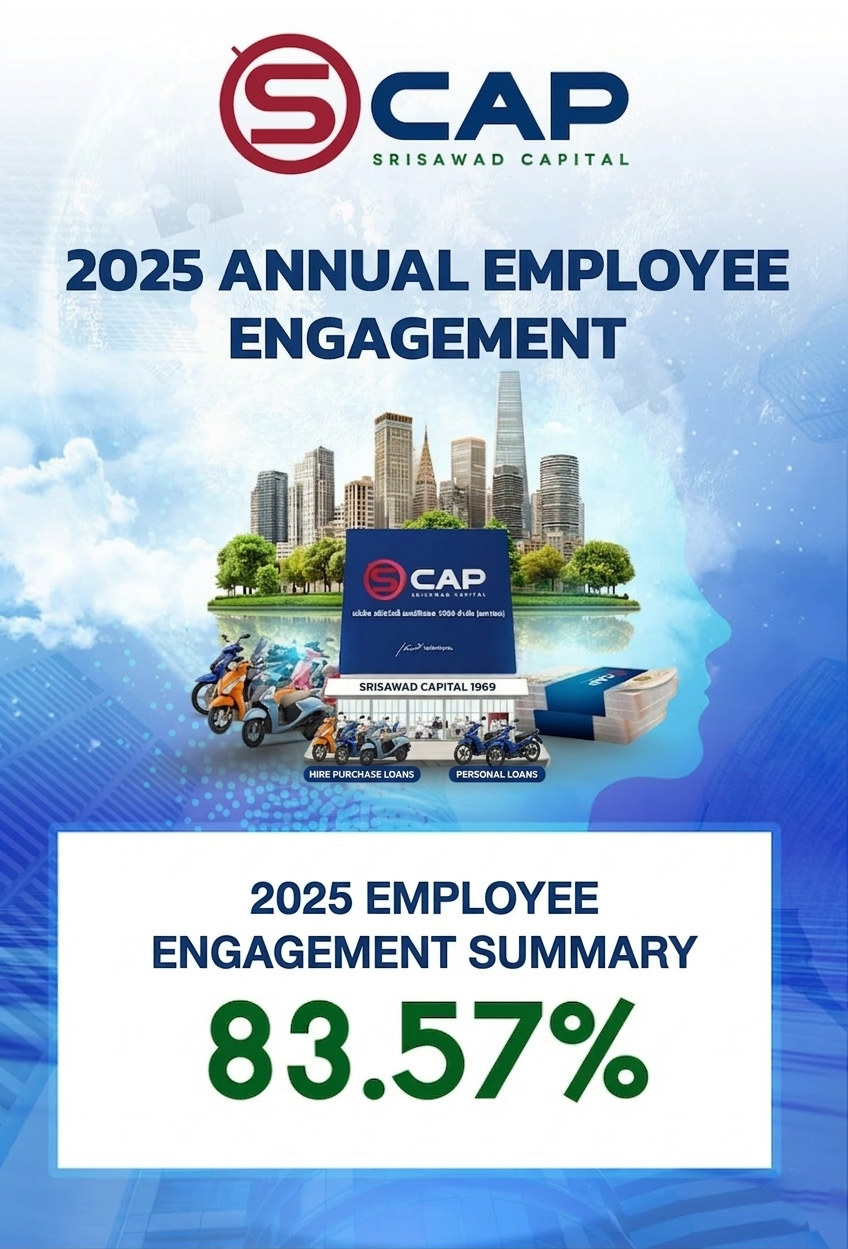
From the employee engagement survey, employees who responded to the survey expressed satisfaction with their work and engagement with the organization, with an overall score of 83.57 percent for the entire organization, indicating a high level of employee engagement. The company will continue to conduct surveys annually to utilize the results for further improvement of its management system. Based on the survey responses, the company assessed and analyzed engagement factors that might affect performance. Therefore, key engagement factors such as career growth, management of employees and high-potential employees, and performance management, among others, were reviewed and improved. To further enhance employee engagement, the company conducted an in-depth analysis of factors impacting engagement assessment results. It integrated the company's human resource management system to be comprehensive, supporting agility and future business expansion based on the Role Model principle, where senior executives serve as role models in fostering engagement within each department and act as a two-way communication channel. This ensures employees are aware of business directions, enabling them to access beneficial information and directly exchange opinions with their supervisors, covering aspects such as inspiring employees, improving performance, and career growth.
In 2025, the company assessed and analyzed engagement factors that might affect performance. Therefore, key engagement factors such as career growth and senior leadership, management of employees and high-potential employees, and performance management, among others, were reviewed and improved.
Engagement Factors | Improvement Actions |
1. Employee and Subordinate Management |
|
2. Career Growth and High-Potential Employees |
|
In 2025, employees voluntarily resigned (Turnover rate). 11.12 percent, with a decrease rate of 57.70 percent. from the previous year. and the employee engagement assessment result is equal to 83.57 percent From a target of 80.00 percent.
Labour Relations Data
| Metric | Current Year | Previous Year | Two Years Ago |
|---|---|---|---|
| Total voluntary resignations (Persons) | 226 | 451 | 201 |
| Male employees who voluntary resigned (Persons) | 158 | 309 | 115 |
| Female employees who voluntary resigned (Persons) | 68 | 142 | 86 |
| Percentage of employee turnover leaving the Company voluntarily (%) | 11.12 | 19.27 | 7.18 |
| Evaluation result of employee engagement | 1 | 1 | 1 |
Employees — Employee Representation
Introduction
The company believes that providing opportunities for employees to form groups and participate in expressing opinions is a crucial foundation for sound labor relations and a strong organizational culture. We respect employees' rights to form creative groups, whether in the form of various committees, employee clubs, or internal activity groups, to create a space for knowledge exchange and to jointly propose guidelines for organizational development.
In 2025, the company supported diverse group activities to strengthen relationships and foster bonds among personnel at all levels. Promoting this two-way communication mechanism not only enables the company to genuinely hear employees' voices but also serves as a key factor in enhancing the quality of working life and empowering the organization to effectively achieve its shared goals.
Employees Are Represented Collectively
Yes
Forms of Representation
| Form |
|---|
| Welfare committee |
Employees — Targets
Has Set Employee Targets
No
Employees — Performance & Outcomes
Has Performance Results
No
Customers — Plan & Guidelines
Has a Customer Management Plan
Yes
Plan Description
Responsible customer service
In providing responsible customer service to manage customer experience, the company considers delivering differentiated value in products and services according to the needs of each target customer group, while continuously improving and developing the delivery of such experiences through in-depth customer data analysis. Furthermore, to achieve the goal of creating a complete experience for customers across all access points to various products and services, the company consistently listens to customer feedback and implements measures to prevent and correct deficiencies, ensuring customers receive an experience that exceeds expectations.
The company surveys and evaluates customer experiences through 3 channels: branches, Call Center, and digital channels, to ensure that customer issues are addressed and resolved within an appropriate timeframe. The company has established mechanisms for monitoring and controlling service quality to meet business standards, including Service Level Agreements (SLA) to prevent prolonged complaints. Furthermore, the company has a mechanism for collecting customer issues or needs on social media through Social Listening tools, enabling the company to be aware of various problems customers encounter.
The company places great importance on sustainable problem-solving by establishing a systematic mechanism for managing customer feedback issues. This involves collaborating with relevant internal and external departments to analyze the root causes of customer problems and identify ways to improve service processes to prevent recurrence and better meet customer needs. As a result, the company has been able to reduce the proportion of customer complaints while the business continues to grow.
Communication of information regarding the impact of products and services to customers/consumers
The company operates with an awareness of responsible financial services (Responsible Lending) and supports the criteria set forth by the Bank of Thailand (BOT) by communicating comprehensive, transparent, and verifiable information about the impact of products and services to customers. This is to be part of driving the resolution of household debt to an appropriate level, promoting quality of life, and enhancing the quality of financial services by providing financial literacy to communities, offering loans that consider customer benefits and fairness, and encouraging the formalization of informal debt. The company will consider the terms and criteria for assistance based on the customer's actual ability, ensuring that it can sustainably help customers who need to solve liquidity problems, reduce expenses, and systematically manage debt in the long term.
Developing satisfaction and strengthening customer relationships
In line with SCAP's vision to be a popular provider of new motorcycle hire-purchase loans and personal loans among customer groups in each area, and its commitment to serving customers with integrity, SCAP prioritizes customer service. Therefore, a customer satisfaction survey regarding products and services was conducted to gather information on needs and measure satisfaction levels. This data will be used to improve and enhance services. Customers can complete the satisfaction survey via the Website and Line Official channels, with the following survey topics:
The company offers products that meet customer needs.
The company utilizes various channels to communicate with customers quickly, such as Line, Facebook, and its website.
The company provides complete information.
The company's employees provide fast, accurate, and attentive service.
Overall, what is your level of satisfaction with the company's services?
Summary of Customer Satisfaction Survey Results for 2025 Percentage 85.75
The organization will use the evaluation results to further develop and improve various aspects through the following 3 measures:
Develop innovative products to meet customer needs.
Enhance service quality for speed, prioritizing customer satisfaction.
Branch employees must be ready to communicate and provide appropriate loan advice to customers.
Protection of customer personal data
With the evolution of business technology today, we find that modern technological development models have a significant direct impact on the business sector, especially in the financial business group. This presents both opportunities and challenges. Consequently, the current business, finance, and financial sectors are paying more attention to the details of customer databases because current transaction models are digital online systems that provide convenience to target customer groups. The company recognizes the importance of the security of customer financial transaction data. We have an efficient customer database storage system (Customer Efficiency System), which allows us to assure customers that their transaction data will be safe from cyber threats.
The company has audited the use of customer personal data for other purposes or objectives and found that by 2025, no employee personal data was used for other purposes.
Plan Areas
| Plan Area |
|---|
| Responsible production and services for customers |
| Communication of product and service impacts to customers/consumers |
| Development of customer satisfaction and customer relationship |
| Protection of customer personal information |
Customers — Satisfaction Results
Customer Satisfaction Results
| Metric | Current Year | Previous Year | Two Years Ago |
|---|---|---|---|
| Evaluation results of customer satisfaction | 1 | 1 | 1 |
Customers — Targets
Has Set Customer Targets
Yes
Targets
| Indicator | Target Areas | Target Year | Target Year — Description |
|---|---|---|---|
| Customer Satisfaction | 3009 · Description: Development of customer satisfaction and customer relationship | 2,025 | In 2025, the company targets a customer satisfaction score of 80 percent. |
Customers — Performance & Outcomes
Has Performance Results
Yes
Performance Description
Customer Management Performance and Outcomes
The Company conducted customer satisfaction surveys on its products and services to gather data on customer needs and measure satisfaction levels. This ensures that customers receive prompt service and products that meet their requirements, as assessed through these surveys.
The Company continuously develops products and services to meet customer satisfaction with responsibility, integrity, and ethics. In 2025, the Company achieved a very high level of customer satisfaction and received customer complaints regarding important matters. 0 cases
Community & Social — Plan & Guidelines
Has a Community & Social Plan
Yes
Plan Description
The company's community and social management plan
With a commitment to conducting business based on good corporate governance, Srisawad Capital 1969 Public Company Limited promotes sustainable business development by creating value for stakeholders within the company's business chain. To elevate sustainable development and ensure that the company's business strategies and development align with these objectives and goals across the entire organization, under the principles of balancing environmental, social, and governance (ESG) aspects, the company helps reduce social inequality, both in access to various basic services and financial services, to enhance the quality of life. This involves supporting and assisting society, including underprivileged individuals, to develop and become self-reliant, while delivering long-term value to stakeholders through various projects and activities, both within and beyond business processes, including support through social enterprises, with volunteer employees serving as key drivers of these activities.
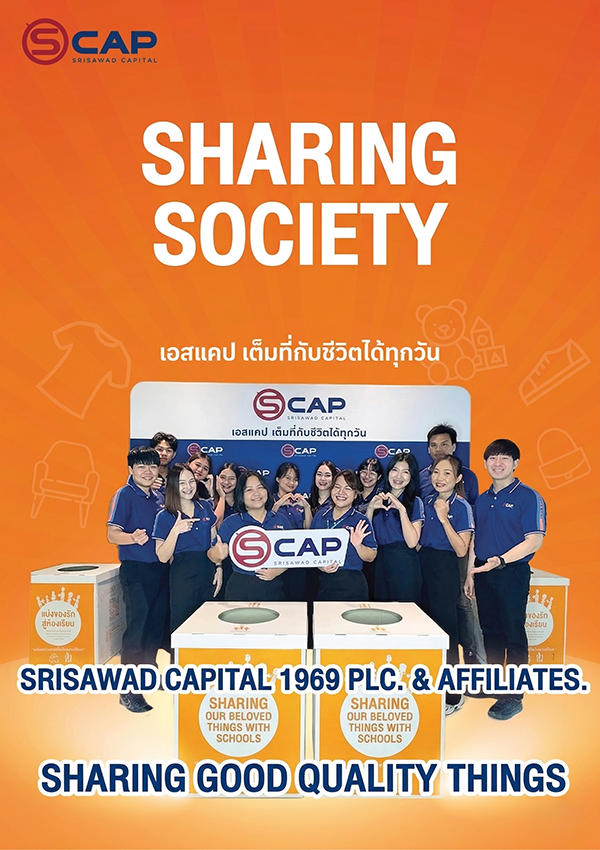
1. Pankan: Society of Sharing Project
Srisawad Capital 1969 Public Company Limited participates in the project "Pankan: Society of Sharing" with the Yuwaphat Foundation, a project focused on creating a society of sharing and mutual assistance. It accepts donations of items that are still in good condition and unused, to be used as goods for sharing in the project's store. These items may include clothes, household goods, toys, books, or other items that are still functional and have practical value. The income generated from the sale of these items will be used to fund various social benefits and positive changes, such as supporting educational activities for children and youth, assisting underprivileged individuals, establishing vocational training programs, or even providing capital to create jobs or economic opportunities for those in need.
This project is committed to creating a sustainable and environmentally friendly society by reducing waste generation and making efficient use of existing resources through the circulation and repurposing of unused items. Furthermore, it promotes community participation in sharing and mutual assistance, fostering awareness of the importance of giving and helping society. It also provides a channel for those in need to access essential items at affordable prices.
Furthermore, the "Pankan: Society of Sharing" project inspires everyone to improve society through the support and cooperation of all parties. It can create sustainable change in various aspects, not only in terms of maximizing resource utilization but also fostering connections within communities characterized by affection and mutual care.
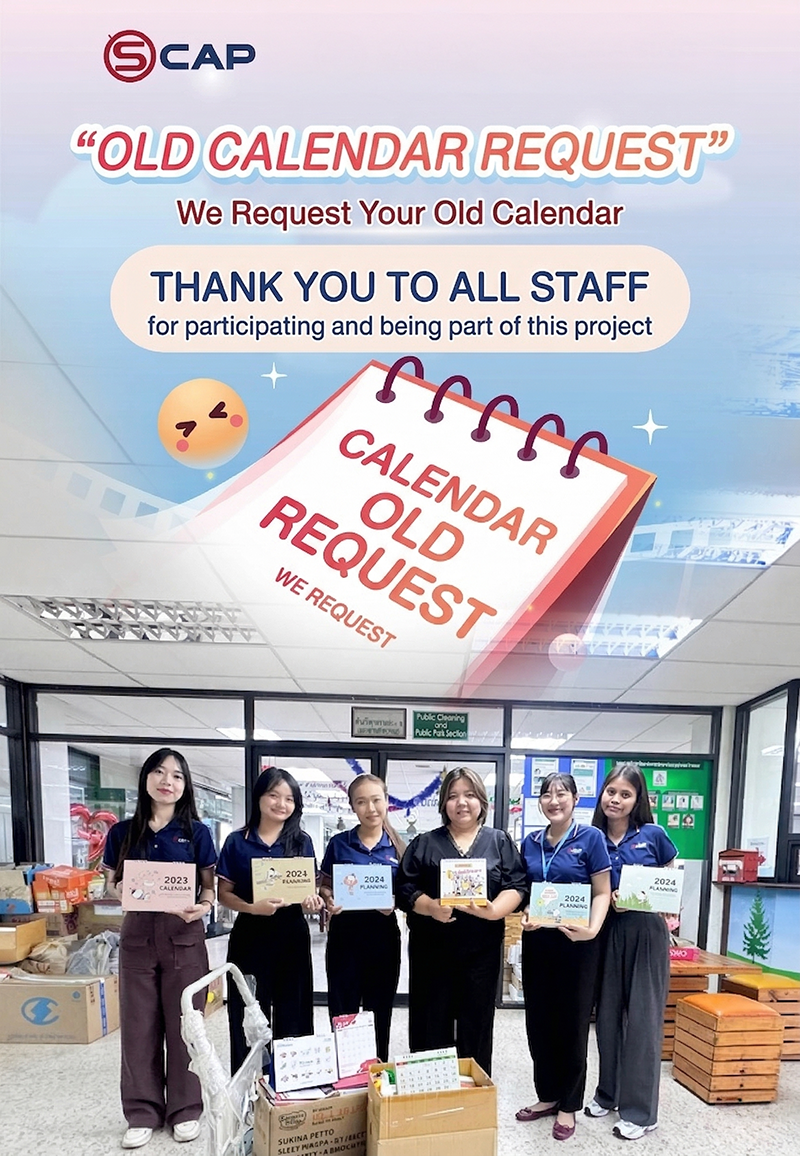
2. "Old Calendars, We Ask" to support learning materials for the visually impaired
Srisawad Capital 1969 Public Company Limited believes in creating an equitable society alongside environmental preservation. In 2025, the company organized an activity to collect used desk calendars to donate to the Education Technology Center for the Blind, for the production of Braille learning materials. This initiative transforms paper waste into valuable educational opportunities.
Project Outcomes and Achievements
Number of calendars collected: 1,938 items
Number of employees participating in the activity: 1,323 people
Link to Sustainable Development Goals (SDGs): This project aligns with the United Nations Sustainable Development Goals in terms of Quality Education (Goal 4) through supporting learning materials for persons with disabilities, and Responsible Consumption and Production (Goal 12) by reducing waste and maximizing resource utilization.
 .
3. SCAP Gives Blood, Gives Life
The company, in collaboration with the National Blood Centre, Thai Red Cross Society, organized the project " SCAP Gives Blood, Gives Life" was organized to campaign and invite the company's employees, business partners, and people in nearby areas to recognize the importance of blood donation, to ensure a sufficient supply of blood for patient treatment nationwide. It promotes the development of a good quality of life for Thais by providing enough blood for patient care, increasing blood reserves in the bank, and encouraging customers, the public, and company employees to realize the importance of continuous voluntary blood donation to save human lives. The campaign will continue to promote and secure blood supplies for delivery to the National Blood Centre, Thai Red Cross Society, to help as many people as possible, as blood donation is an easy act of kindness. If donated continuously every 3 months, coupled with providing knowledge about preparation before blood donation to volunteers and the general public.

4. Financial Literacy for the Community
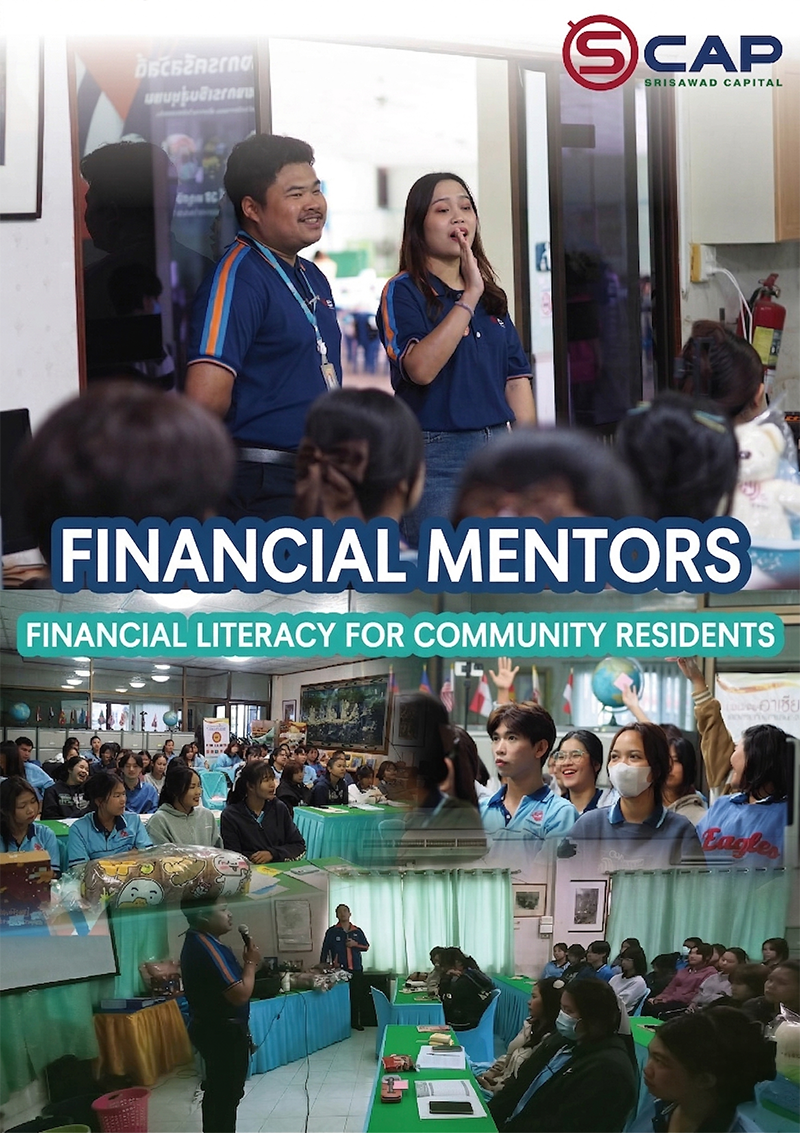
Financial Mentorship Project
Currently, personal financial management issues remain a major challenge for many individuals in communities, especially among those who lack sufficient financial education. This sometimes leads to debt problems, overspending, or inadequate financial planning. To help address this issue, Srisawad Capital 1969 Public Company Limited established the "Financial Mentorship Project" by providing financial literacy to people in various communities. The project aims to promote basic financial knowledge so that community members have the correct financial management skills and can sustainably improve their quality of life. The expected outcomes for trained members are as follows:
Community members participating in the project possess basic financial management knowledge and skills, enabling them to manage their finances more effectively.
Reduction of debt problems in the community and an increase in the number of people with discipline in saving and investing.
The community has financial mentors who provide advice and mutual assistance in financial management.
Enhancing financial stability and improving the quality of life for community members
The company aims to promote and develop basic financial literacy for community members to help them manage their finances efficiently, fostering an understanding of saving, investing, and sustainable debt prevention.through training, consultation, and close follow-up.
Plan Areas
| Plan Area |
|---|
| Occupational health, safety, health, and quality of life |
| Disadvantaged and vulnerable groups |
Community & Social — Targets
Has Set Community & Social Targets
No
Community & Social — Performance & Outcomes
Has Performance Results
No
Law Violation Incidents
Law Violation Incidents
| Metric | Current Year | Previous Year | Two Years Ago |
|---|---|---|---|
| The total number of cases or incidents of significant violations of laws or regulations regarding social and human rights (Cases) | 0 | 0 | 0 |
| The total number of cases or incidents that cause significant labor disputes (Cases) | 0 | 0 | 0 |
| The total number of cases or complaints related to consumer rights violations (Cases) | 0 | 0 | 0 |
| The total number of cases or complaints related to partner rights violations (Cases) | 0 | 0 | 0 |
| The total number of cases or incidents that cause disputes with the community/society (Cases) | 0 | 0 | 0 |
| The total number of cases or incidents related to cyber security or customer data breaches (Cases) | 0 | 0 | 0 |
| The total number of cases or incidents related to safety and occupational health at work (Cases) | 0 | 0 | 0 |